

IRRIGATION SYSTEM INSTALLATION AND REPAIR
IRRIGATION SYSTEM INSTALLATION AND REPAIR IN Winnsboro, TX
Heavy clay takes water so slowly that Texas A&M AgriLife guidance caps a single watering cycle near 5 minutes and asks for an hour of soak between them. North East Texas Lawn Sprinkler and Drainage installs and repairs full irrigation systems across Winnsboro, TX, Tyler, Longview, Greenville, and Mount Pleasant, covering turf, beds, trees, and acreage under one coherent plan.
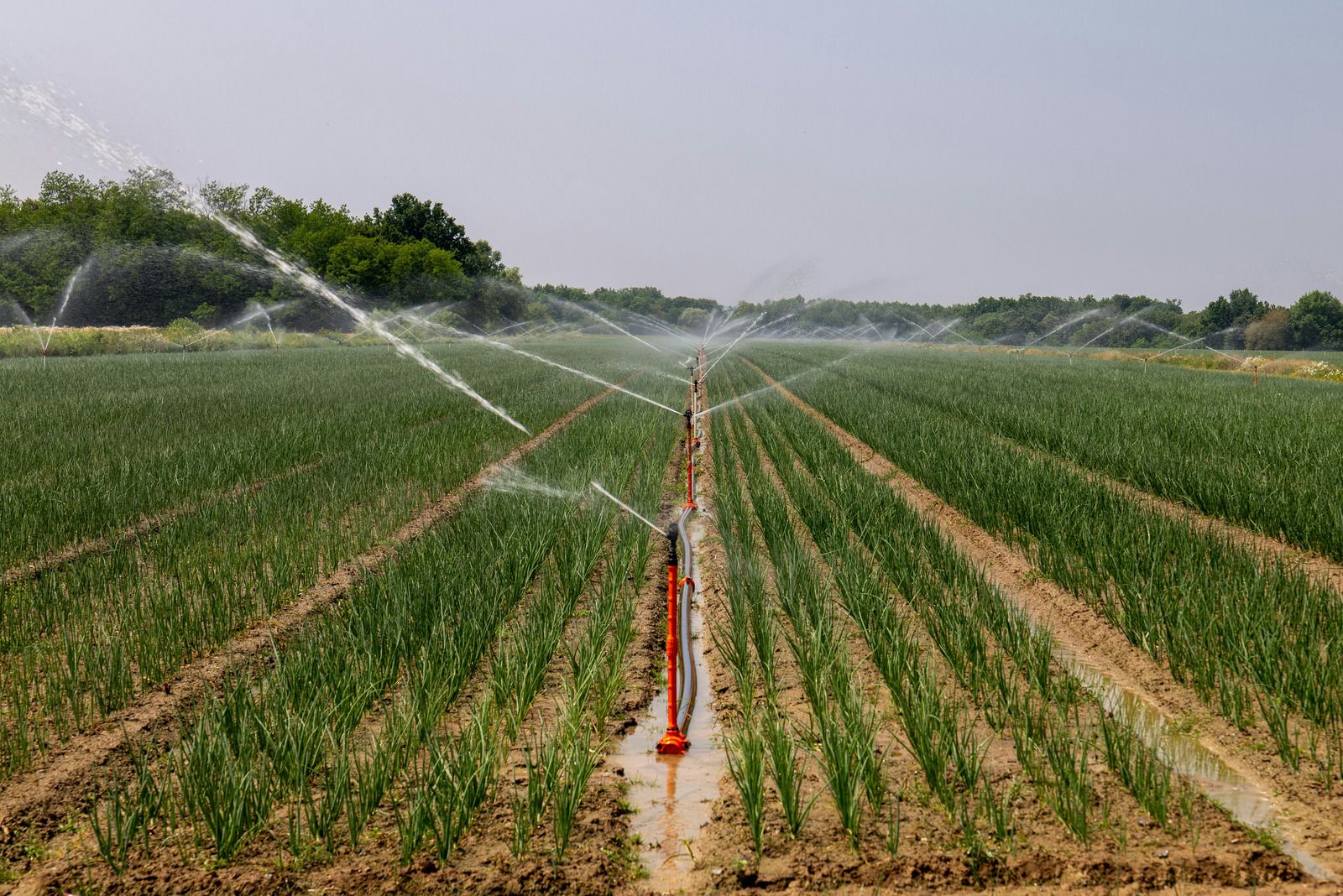
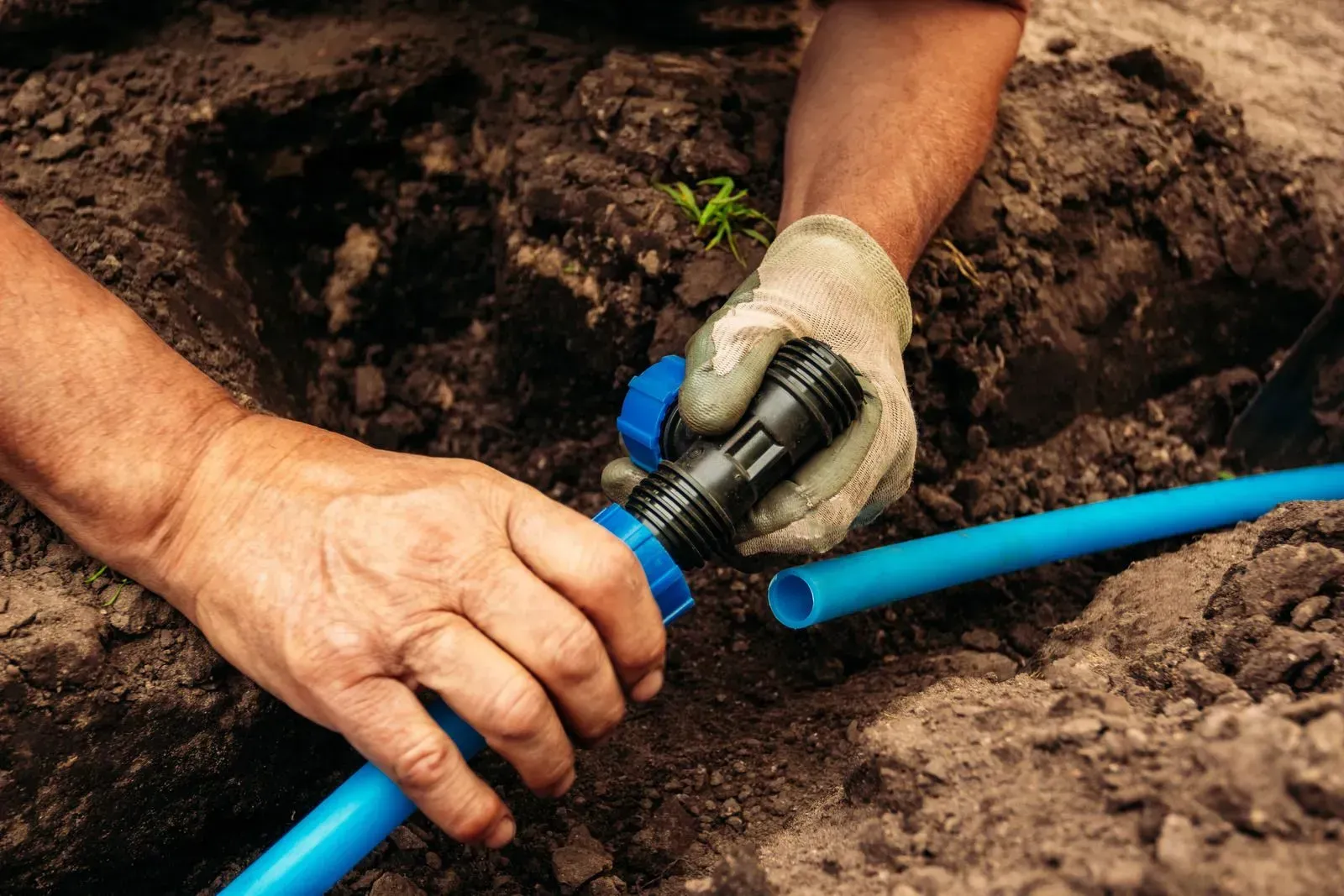
AN IRRIGATION SYSTEM IS A UTILITY, NOT AN ACCESSORY.
It runs on your water meter every week of the growing season, and its efficiency decides whether that spend goes into your landscape or into the street. Yet most systems are inherited rather than chosen, patched by whoever was available, and never audited even once since the day the sod went down over them.
We treat the whole system as one thing: source, backflow, mainline, valves, wiring, emitters, and controller. Fix or design any one of those in isolation and the others quietly limit what it can do.
✓ Whole system reviewed, not just the failing part
✓ Turf, beds and trees zoned separately
✓ Drip and spray sized to their own run times
✓ Free written estimate before work begins
IRRIGATION SYSTEM INSTALLATION AND REPAIR
MOST WASTED WATER LEAVES THROUGH A SYSTEM THAT LOOKS FINE.
Nothing has to be visibly broken for a system to waste thousands of gallons a season. Overlapping arcs double up on one strip while the far corner gets half of what it needs. Run times set for spring keep running in October. Drip zones share a valve with turf and get a fraction of the time they want. None of it announces itself, and all of it shows up on the bill.
OUR SEASONS SWING HARDER THAN THE CONTROLLER EXPECTS.
A landscape here can move from saturated ground in May to hard drought by August, then take a freeze in January that splits an exposed backflow assembly. A single fixed schedule cannot serve all of that. We build the rain or moisture shut-off device that new automatic systems require, set seasonal programs rather than one annual guess, and place the assembly where a cold snap will not end your spring startup.
OLD SYSTEMS RARELY SHOW US SOMETHING NEW.
We have worked on systems fed by city meters, private wells, and storage tanks over 45 years, and on properties running from four zones up to acreage that takes most of a day to cycle through. That range is why we can usually tell within one visit whether an older system is worth rebuilding or has reached the end. Which of those is yours likely to be?
WHAT A WELL BUILT SYSTEM RETURNS
ONE COMPANY FOR THE WHOLE SYSTEM
Design, installation, repair, and drainage all handled by the same people means no one blaming the previous contractor. The history of your system stays with the team maintaining it.
WATER USE YOU CAN ACTUALLY SEE
Correct zoning and honest run times turn an unpredictable summer bill into a number you can anticipate. Most owners notice the difference within the first full billing cycle after the work.
PLANTS FED ON THEIR OWN SCHEDULE
Trees, shrubs, and turf have genuinely different needs, and separating them lets each get what it wants. Beds stop drowning while the lawn is being watered, and vice versa.
OLD SYSTEMS WORTH KEEPING
A dated system with sound pipe and good coverage rarely needs replacing. Upgrading heads, valves and the controller often costs a fraction of new and performs nearly as well.
RUNOFF THAT STOPS AT THE CURB
Cycle and soak scheduling lets clay absorb what it is given instead of sending it down the driveway. The water you are billed for ends up in the root zone where it belongs.
PAPERWORK DONE PROPERLY
The design plan, a completed maintenance checklist and a permanent label on the controller stay with your property. That documentation matters at resale and every time someone services the system later.
WHAT WE BUILD AND REPAIR
OUR IRRIGATION SYSTEM WORK
Some properties need a system built from the meter out, and others need an existing one brought back to what it should have been. These are the jobs that fill most of our calendar.
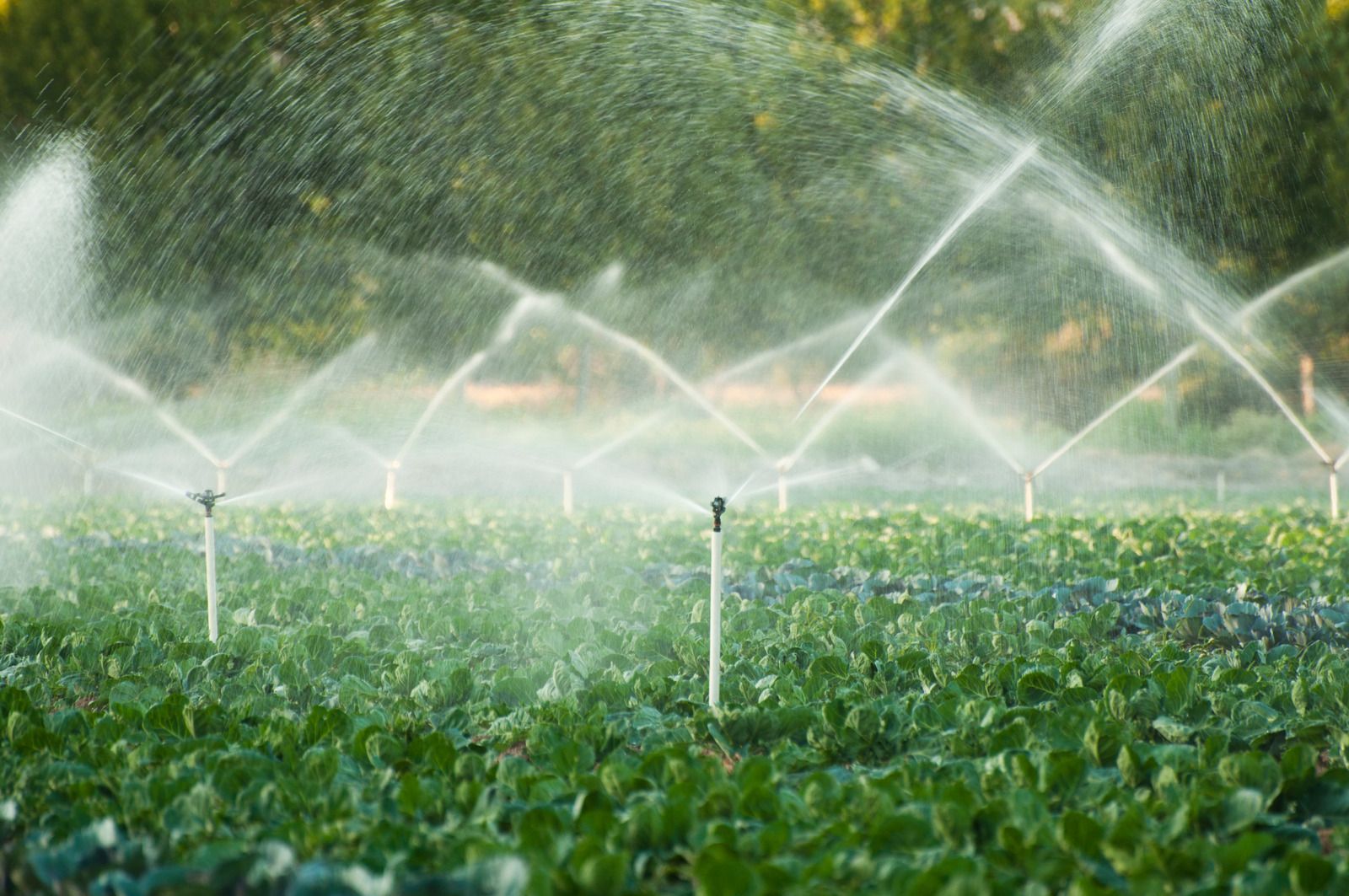
FULL SYSTEMS
Complete Irrigation System Installation
Whole-property systems designed around measured flow, then trenched, piped, wired, and programmed as one build. Turf, beds, trees, and any lawn areas beyond the yard proper are planned together rather than added on later.
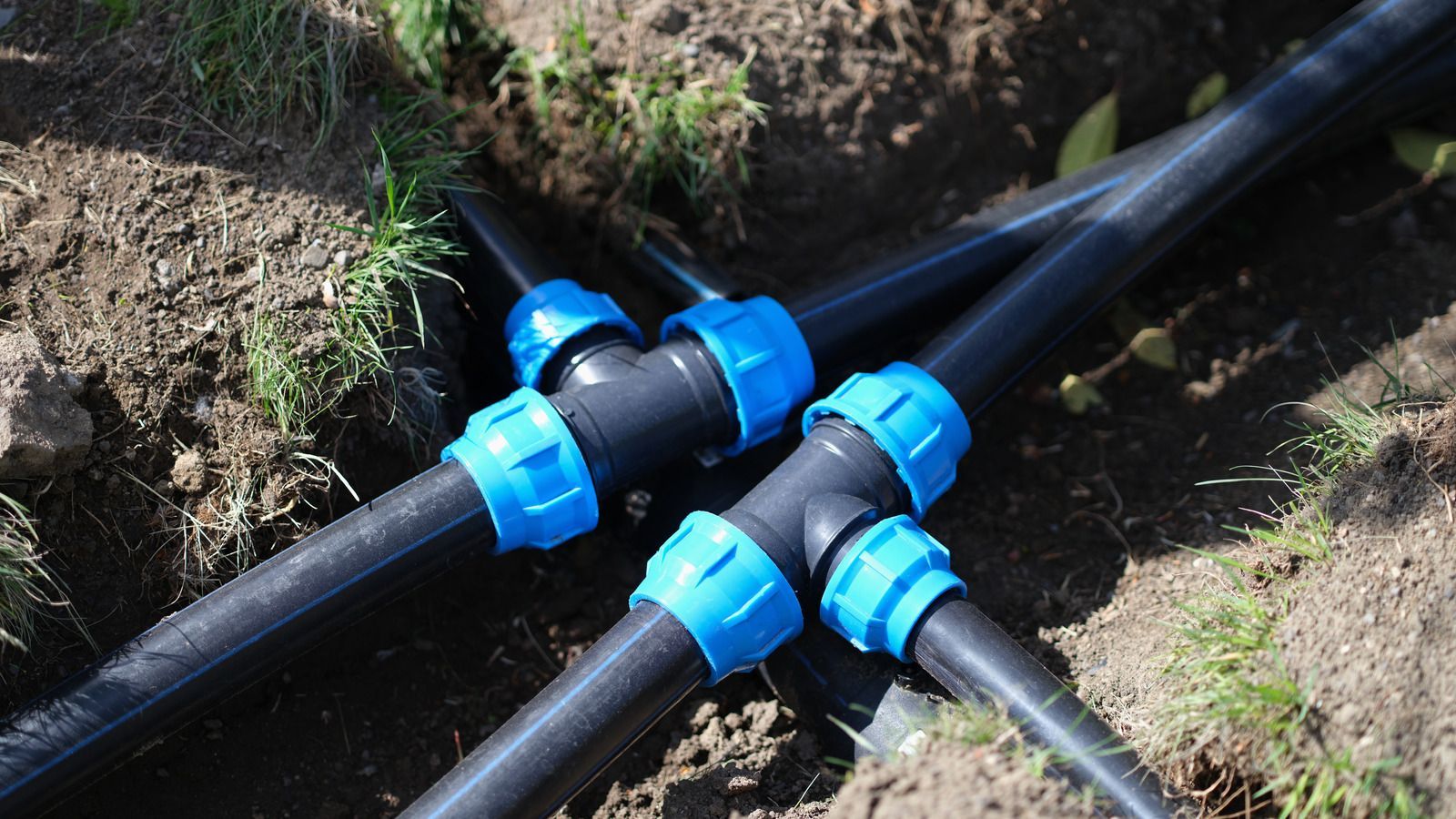
SYSTEM REPAIRS
Irrigation Repair and Component Replacement
Failing valves, split laterals, faulty wiring, and worn emitters are diagnosed and replaced with parts matched to what is already installed. Repairs restore the original design intent instead of patching around it again.
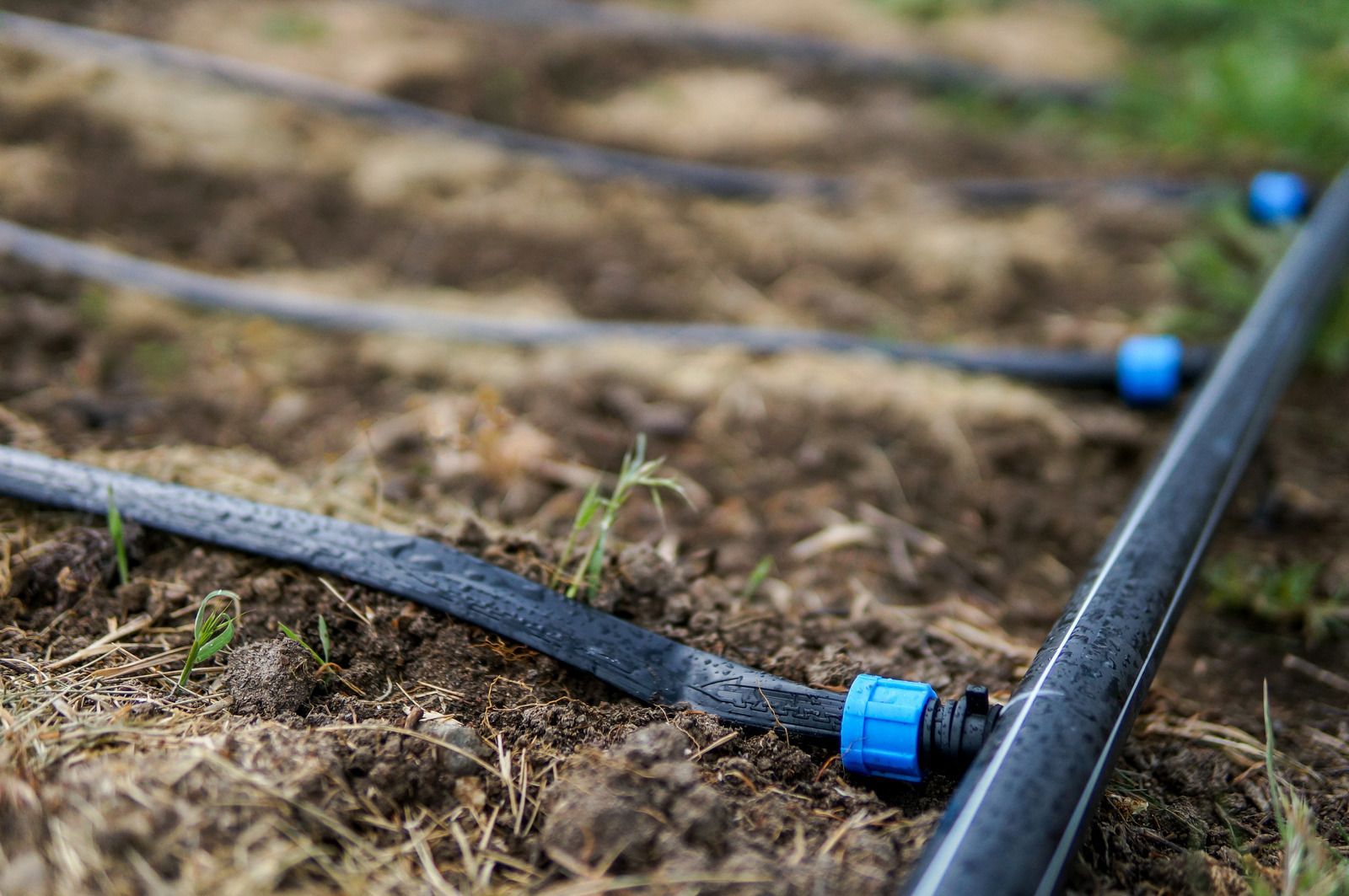
DRIP LINES
Drip Irrigation for Beds and Trees
Emitters and inline tubing deliver water slowly at the root, where evaporation and wind cannot take it. Beds, borders, vegetable rows, and young trees get their own valve and their own far longer run time.
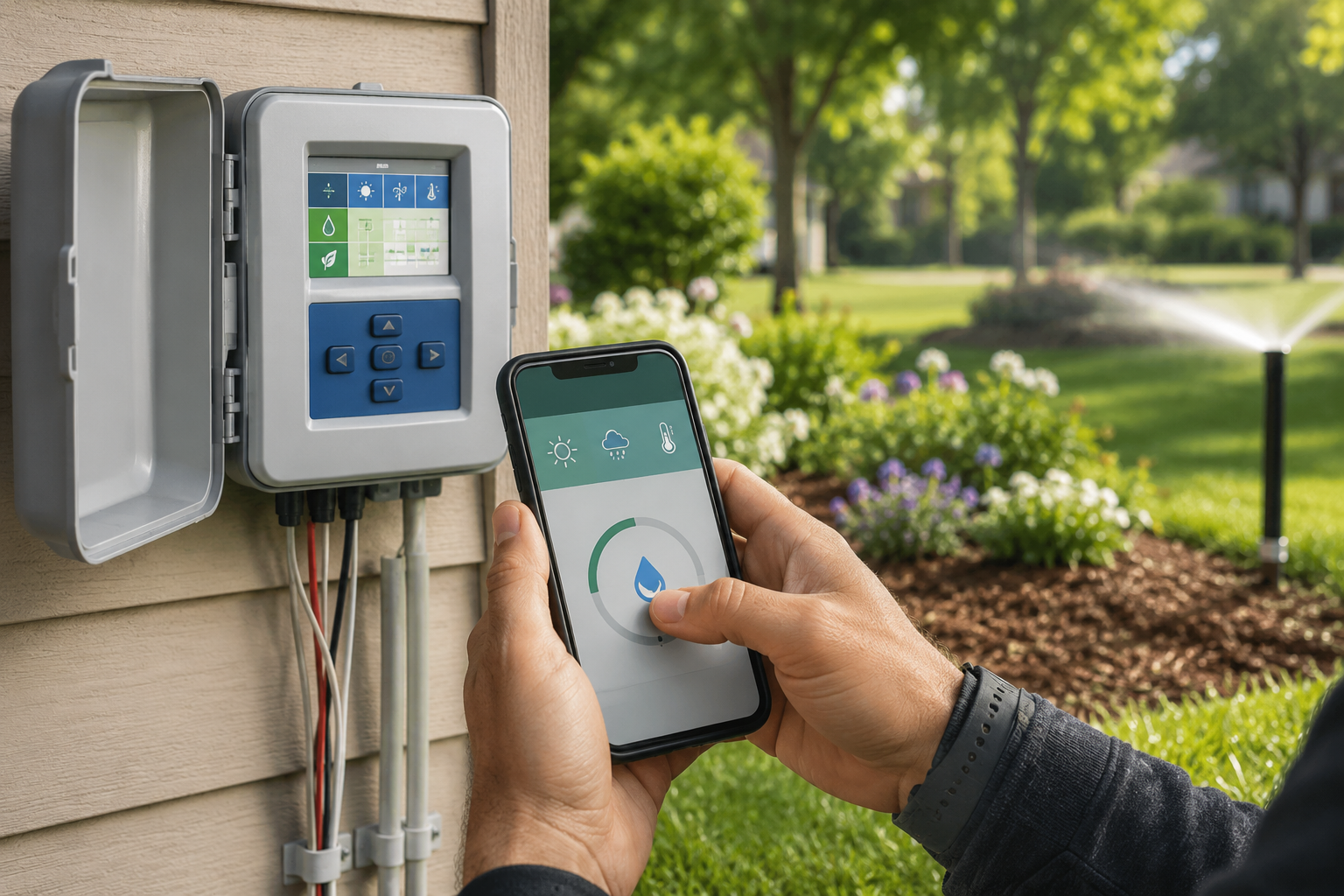
SMART UPGRADES
Weather-Based Controller Upgrades
Modern controllers adjust automatically to rainfall, temperature, and seasonal demand, and most allow scheduling from a phone. Existing field wiring usually supports the upgrade, so the work stops at the wall in most cases.
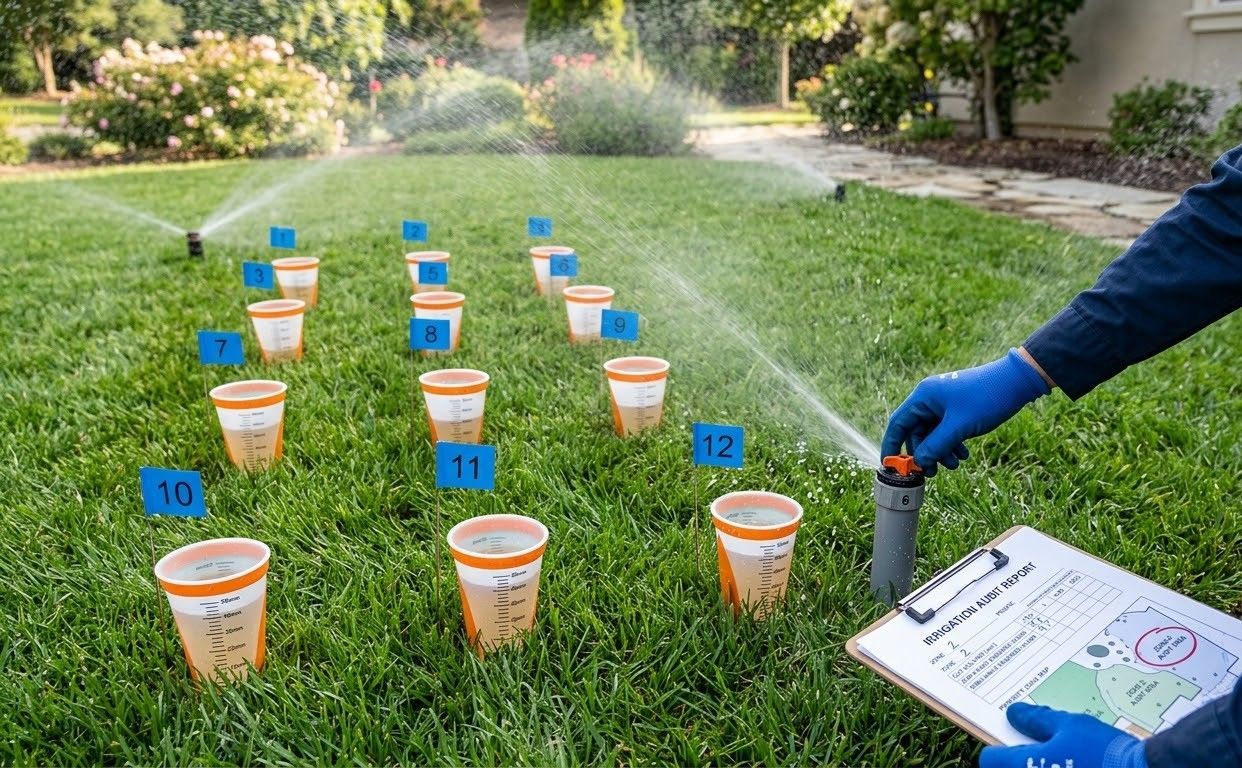
AUDIT WORK
Coverage Audits and Zone Rebalancing
Catch cups placed across a zone reveal exactly where water lands and where it does not. Nozzles, arcs and run times are then rebalanced so the whole area receives a consistent depth per cycle.
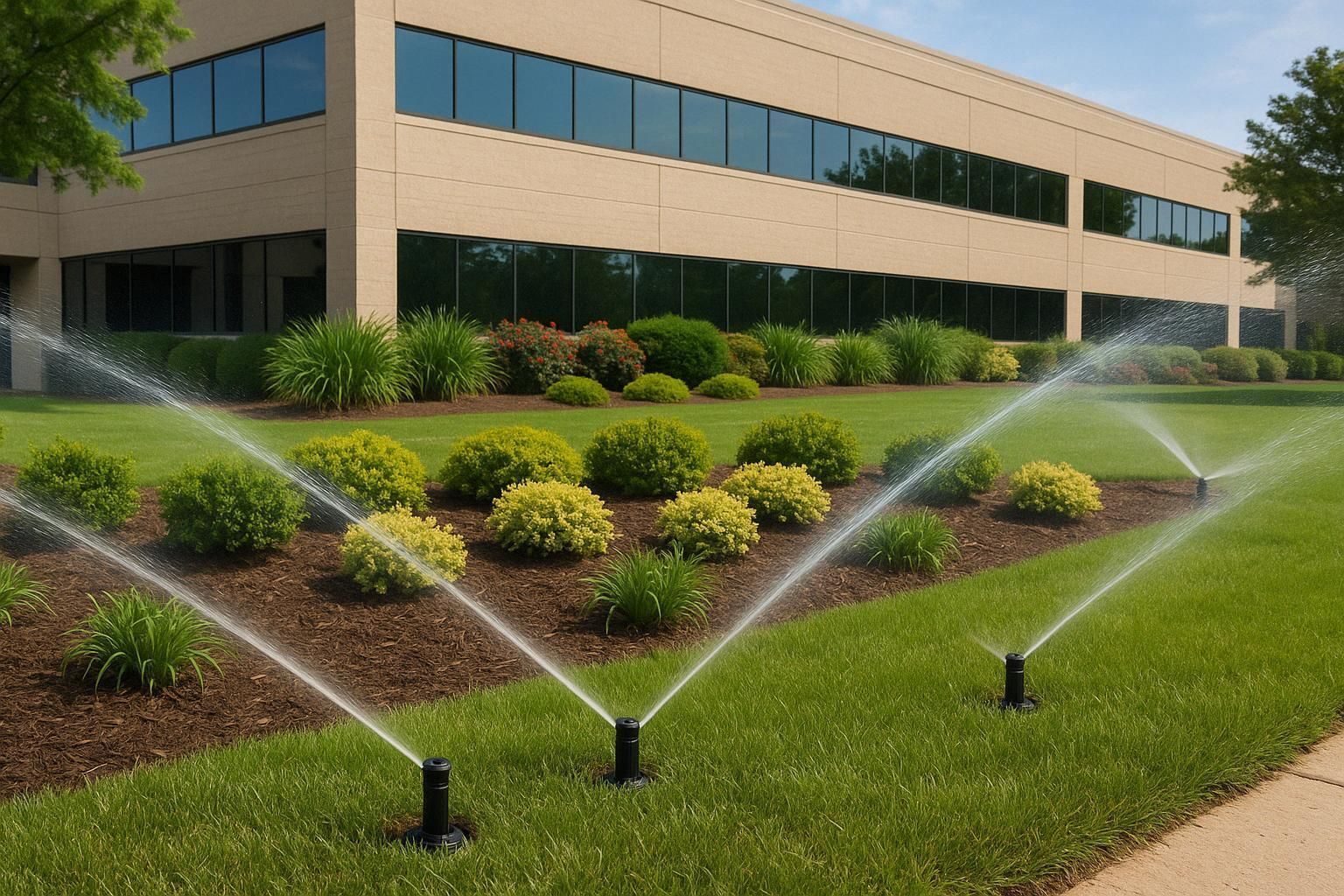
LARGE PROPERTIES
Acreage and Commercial Irrigation
Pastures, shop lots, church grounds, and commercial landscapes need staged cycles that respect the limits of one water source. Zones are sequenced so pressure holds and the full property still finishes overnight.
THE WORD ON OUR WORK
WHAT OUR CLIENTS SAY.
What people mention most is that someone finally explained the whole system to them: which valve feeds what, why the beds run longer, and what the controller is actually doing at four in the morning. Reviews are posted on our Google profile.
Common Questions
FREQUENTLY ASKED QUESTIONS.
These come up whether we are building a new system or bringing an old one back. If yours is not answered here, send the details through our contact page and we will respond directly.
Can an irrigation system use too much water even if nothing appears to be broken?
Absolutely. A system can run without visible leaks and still waste water through overlapping coverage, incorrect heads, excessive run times, poor zone design, or spray landing on driveways and sidewalks. Better coverage puts more water where the landscape needs it.
Why does water run off my lawn before the sprinkler cycle is finished?
East Texas properties often have soil that absorbs water more slowly than sprinklers apply it, and slopes make runoff worse. Adjusting distribution and shortening individual cycles gives the soil time to absorb the water instead of losing it downhill.
What is the difference between drip irrigation and spray irrigation?
Spray throws water through the air across an area, which suits turf. Drip releases it slowly at soil level through emitters, which suits beds, borders, and trees where evaporation and overspray would otherwise waste a good share of it.
How often should an irrigation system be inspected?
Twice a year suits most properties, once at spring startup and once as the season winds down. Between those, a quick monthly run of each zone catches broken heads long before they show up as dead grass in July.
Can an older irrigation system be upgraded instead of replaced?
Often, yes. If the mainline holds pressure and head placement is reasonable, replacing nozzles, valves, and the controller restores most of the performance. North East Texas Lawn Sprinkler and Drainage makes that call honestly for owners in Winnsboro, TX.
What does a weather-based controller actually adjust?
It changes run times using local weather data and seasonal demand, shortening cycles after rain and lengthening them during heat. Some also skip a scheduled start entirely when soil moisture or forecast rainfall makes watering unnecessary that day.
Can one irrigation system serve a large or commercial property?
Yes, provided zones are sequenced to the available flow. Rather than running everything at once, a large system cycles through in stages overnight, which keeps pressure steady and finishes well before the property opens for business each morning.
How do I find which zone is driving up my water use?
Run one zone at a time and watch the meter dial while everything else stays off. Across Winnsboro, TX, North East Texas Lawn Sprinkler and Drainage has isolated more high-bill causes with that test than any tool we own.
HOW WE WORK
FROM FIRST REVIEW TO FINAL SCHEDULE, HERE IS HOW.
STEP 01
REVIEW WHAT IS ALREADY THERE
Existing hardware, wiring and pipe are inspected before anything is proposed. Plenty of properties already own most of a good system and need far less new material than they were expecting to buy.
STEP 02
MEASURE WHAT THE SOURCE CAN GIVE
Pressure and flow at the meter, well or tank set the hard ceiling on zone size. Every design decision after this one depends on those two numbers being measured rather than assumed.
STEP 03
SEPARATE THE ZONES BY NEED
Turf, beds, trees, sun, and shade are split onto their own valves. Grouping by need is what allows one part of the property to be watered heavily while another gets a light touch.
STEP 04
INSTALL OR REBUILD THE HARDWARE
Pipe, valves, wiring, emitters, and backflow protection go in or get replaced to current standards. Everything is pressure tested while it remains accessible rather than after the sod goes back down over it.
STEP 05
CATCH CUP TEST THE COVERAGE
Cups spread across each zone show exactly how much water reaches each part of it. Nozzles and arcs are adjusted until the depth is consistent instead of merely looking correct from the patio.
STEP 06
SET CYCLE AND SOAK TIMES
Programs are built around how fast your soil actually accepts water, splitting long runs into short cycles with soak periods. You get the schedule explained, along with the design plan and completed paperwork.
Get Your Free Estimate
LET US LOOK AT THE WHOLE SYSTEM AND PRICE IT, FREE.
Whether your property needs a complete irrigation system or an inherited one brought back to working order, the answer starts with someone measuring what you have rather than quoting from the curb. Reach us through our contact page and we will walk the property in Winnsboro, TX or the surrounding counties, test the source, review every zone from end to end, and hand you a written price with nothing owed for the visit.
WHAT YOUR IRRIGATION QUOTE COVERS:
✓ Full review of existing hardware
✓ Pressure and flow measured at the source
✓ Zone by zone coverage assessment
✓ Repair versus replacement recommendation
✓ Controller and sensor requirements included
✓ A written price with no obligation