

SPRINKLER INSTALLATION
SPRINKLER INSTALLATION IN Winnsboro, TX
Texas rules require at least 6 inches of select backfill over every buried irrigation line, and every head inside a zone must apply water at one matched rate. North East Texas Lawn Sprinkler and Drainage installs sprinkler systems across Winnsboro, TX, Quitman, Mineola, Tyler, and Longview, zoned by sun, slope, soil, and plant type before a single trench is opened
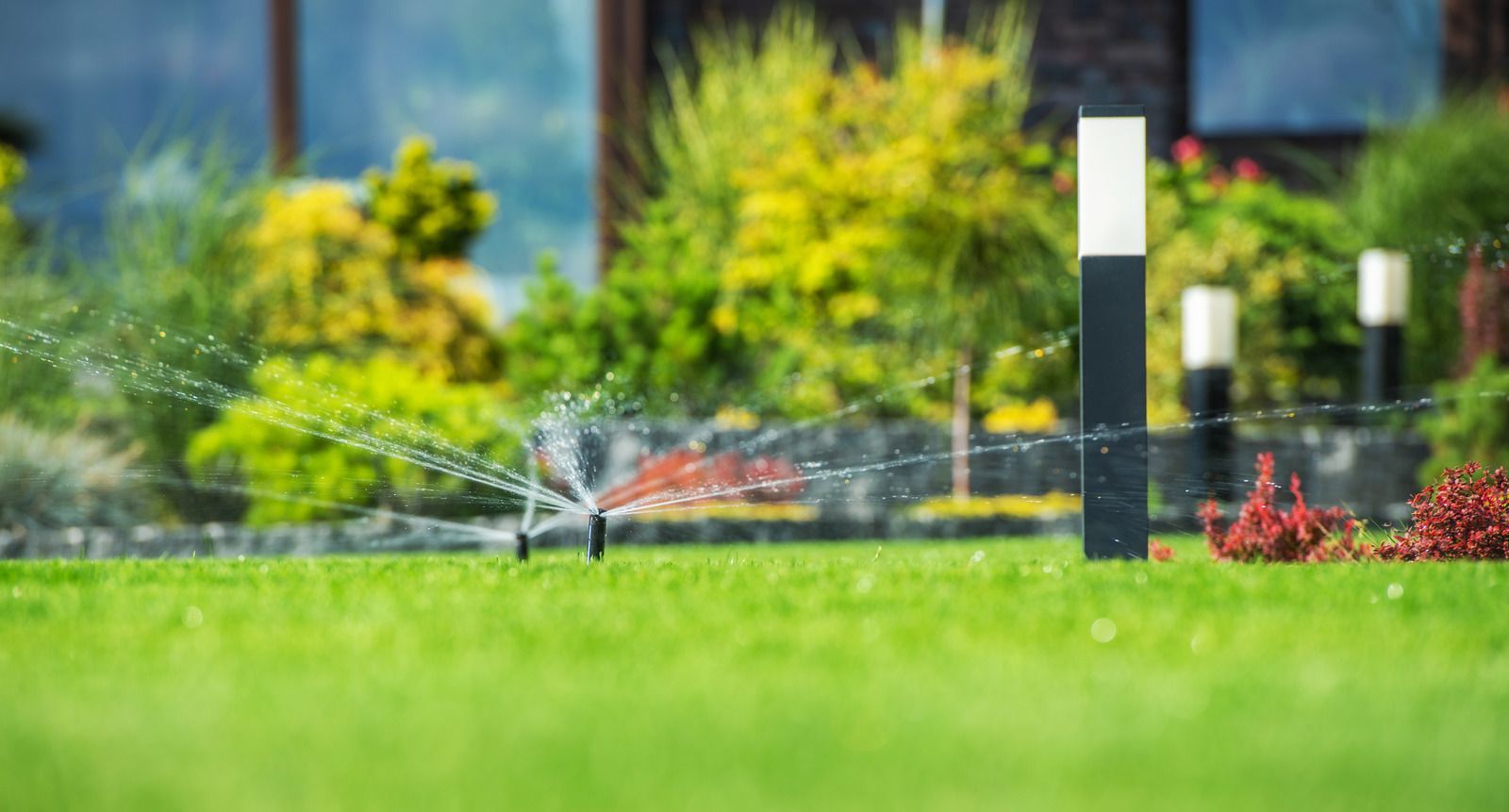

A LAWN IS ONLY AS GREEN AS ITS WEAKEST ZONE.
Most of the dry corners and soggy strips we are called out to fix trace back to a layout decision made on day one. Heads spaced too far apart, a zone asked to carry more heads than the meter can feed, or turf and flower beds wired onto the same valve. We solve those problems on paper first, then in the ground.
That means measuring static pressure and available flow at your meter before choosing nozzles, and separating the shady north side of a house from the open front lawn, because those two areas never want the same water.
✓ Static pressure and flow measured before design
✓ Matched precipitation rate inside every zone
✓ Turf, beds and trees on separate valves
✓ Free written estimate before any work begins
SPRINKLER INSTALLATION
YOUR YARD IS NOT ONE PLACE, AND IT SHOULD NOT WATER LIKE ONE.
A single property in Wood County can hold full-sun turf, a shaded side yard, a sloped back corner that sheds water, and beds under a mature oak that drink constantly. Watering all of that on one clock guarantees that something stays thirsty and something else stays wet. We break the property into zones that reflect what actually grows there, then size each zone to the water your service line can genuinely deliver.
EAST TEXAS CLAY DECIDES HOW FAST WE CAN GIVE IT WATER.
Heavy clay accepts water far more slowly than a spray zone throws it, which is why Texas A&M AgriLife guidance for clay soils caps a single cycle at roughly 5 minutes and asks for an hour of soak. Design has to respect that. We choose lower application rate nozzles on clay and slopes, then build the run times around soak intervals so the water goes down instead of running toward the street.
45 YEARS OF PUTTING PIPE IN EAST TEXAS GROUND.
We have been installing sprinkler systems in this part of the state for 45 years, long enough to know which neighborhoods sit on sand, which on tight clay, and where a shallow rock shelf will stop a trencher cold. That history shows up in small decisions: where we set the manifold, how we route wire, how much slack we leave for the ground to move. Would you rather find that out during design or two summers later?
WHAT A PROPERLY DESIGNED SYSTEM DELIVERS
WATER THAT LANDS WHERE IT COUNTS
Every head throws far enough to reach the next one, so coverage overlaps instead of leaving pale rings between them. Grass greens evenly across the whole lawn rather than in patches you learn to ignore.
A LOWER BILL EVERY SUMMER
Water that lands on turf instead of driveways, fences and sidewalks is water you paid for and actually used. Correct nozzle sizing and honest run times usually pull summer usage down noticeably from month one.
GRASS THAT SURVIVES AUGUST
Deep, spaced watering pushes roots down where the soil stays cooler and holds moisture longer. Lawns built that way hold color through the hottest stretch instead of going dormant and thin by mid season.
YOUR WEEKENDS BACK
No more dragging hoses across the yard, moving oscillating sprinklers every 20 minutes, or getting home late and finding the front lawn crisping. The controller runs before sunrise while everyone is still asleep.
BEDS AND TURF FED DIFFERENTLY
Shrubs, perennials and young trees want slow water at the root, while turf wants an even sheet across the surface. Separating them on their own valves keeps one from drowning so the other can drink.
A SYSTEM THAT MEETS THE RULES
New systems here need backflow protection, an isolation valve ahead of it, and a device that stops the cycle when it rains. Building that in from the start avoids an expensive retrofit later.
WHAT WE INSTALL
OUR SPRINKLER INSTALLATION WORK
Every install we do is drawn before it is dug. Below are the pieces that make up a complete system, from the valve manifold at the meter out to the last nozzle along your back fence line.
NEW LAWNS
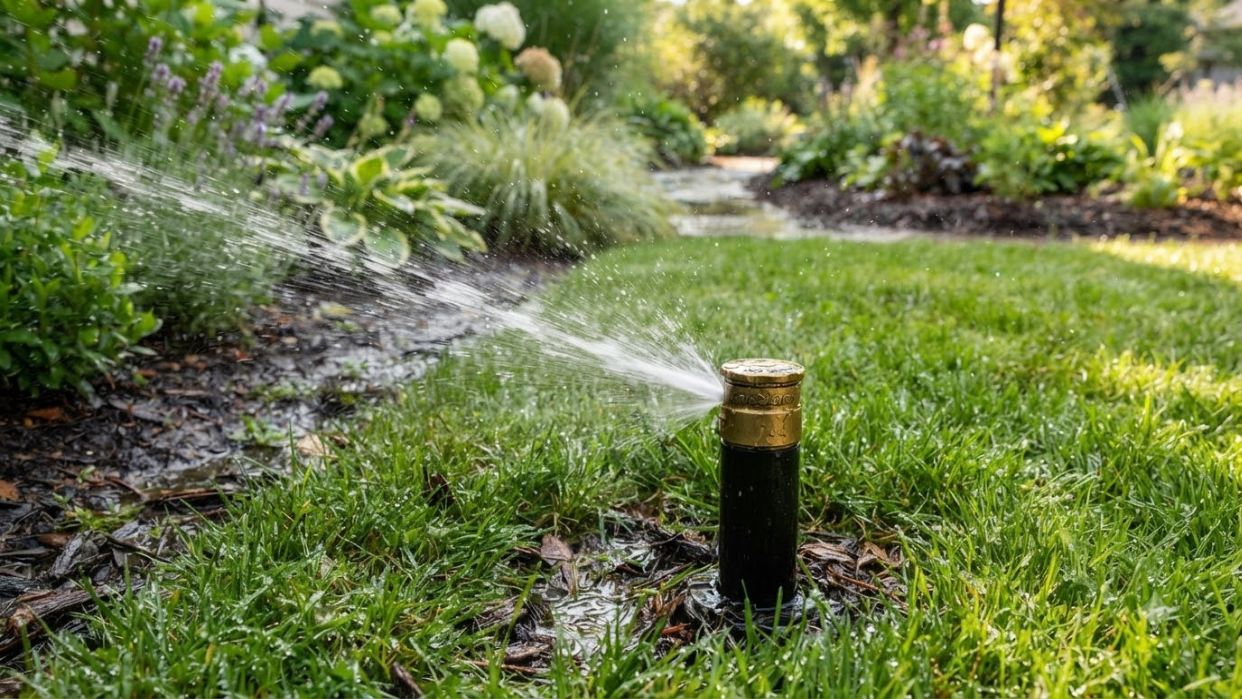
New Sprinkler System Installation
Complete systems built from the water source outward for homes, shops, and commercial lots. Trenching, mainline, laterals, valves, heads, and controller are installed together as one designed package rather than assembled piece by piece over several seasons.
ZONE LAYOUT
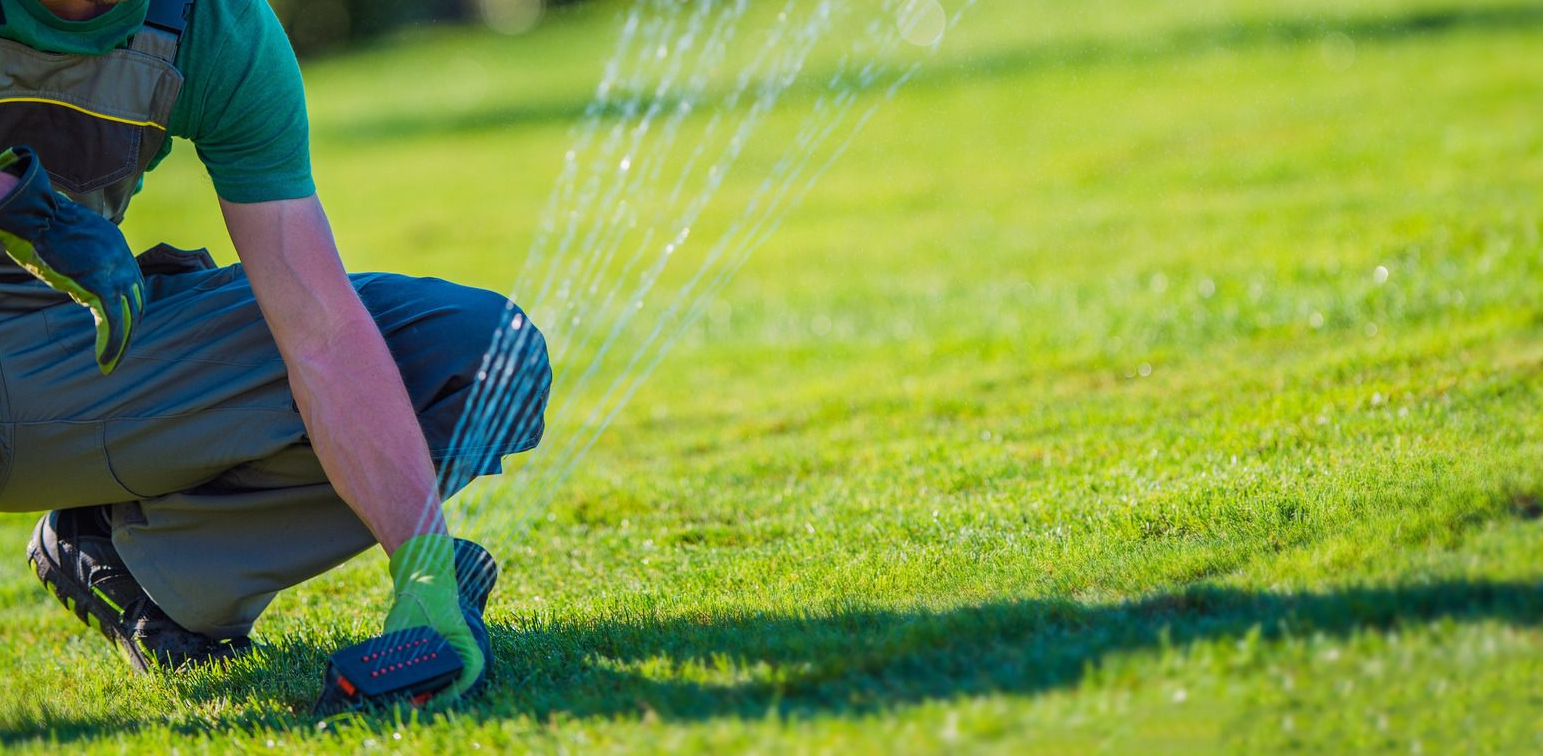
Zone Design and Hydraulic Planning
Zones are drawn around sun exposure, slope, soil texture, and plant type, then checked against measured flow so no valve is asked to feed more heads than the line supports. Undersized zones cause weak throw and pale edges.
HEAD SELECTION
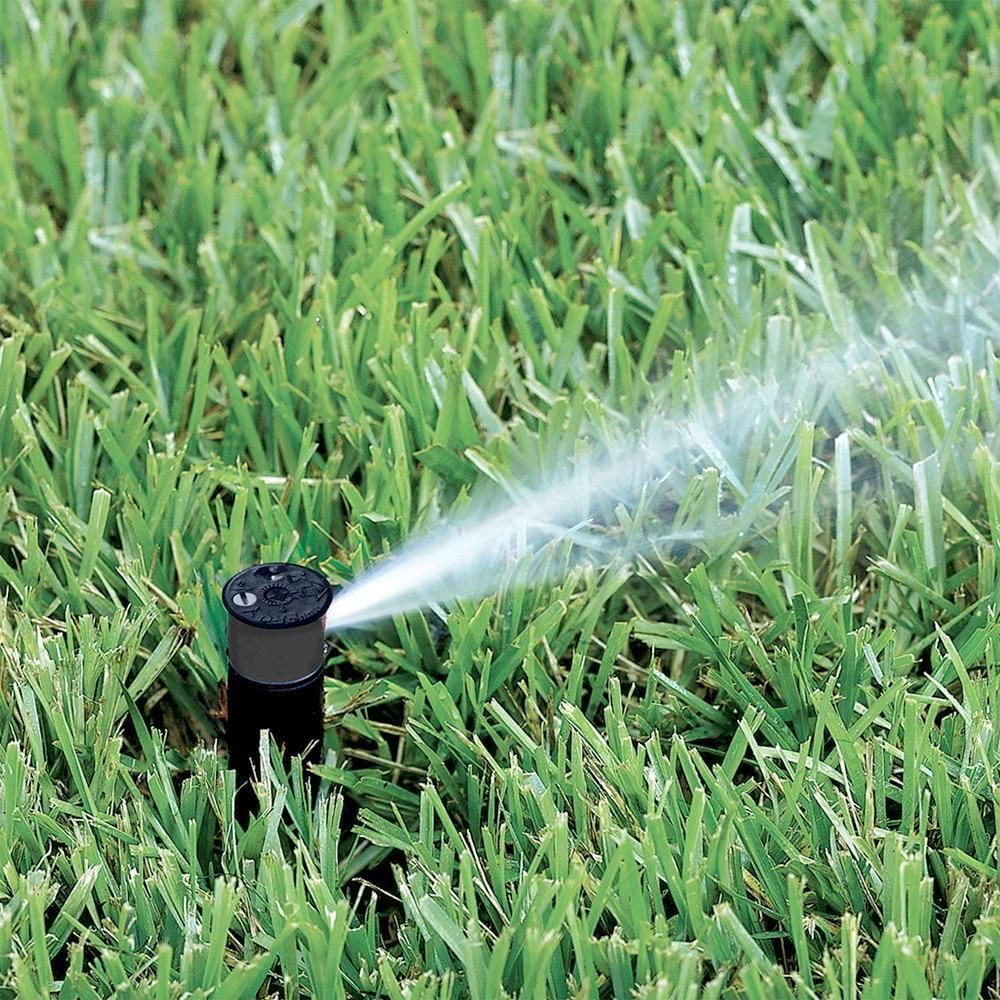
Spray and Rotor Head Installation
Rotors cover open turf efficiently while sprays handle narrow strips and tight corners. Mixing them inside one zone creates uneven watering, so heads are grouped by application rate and set at a height that survives mowers.
VALVES AND WIRING
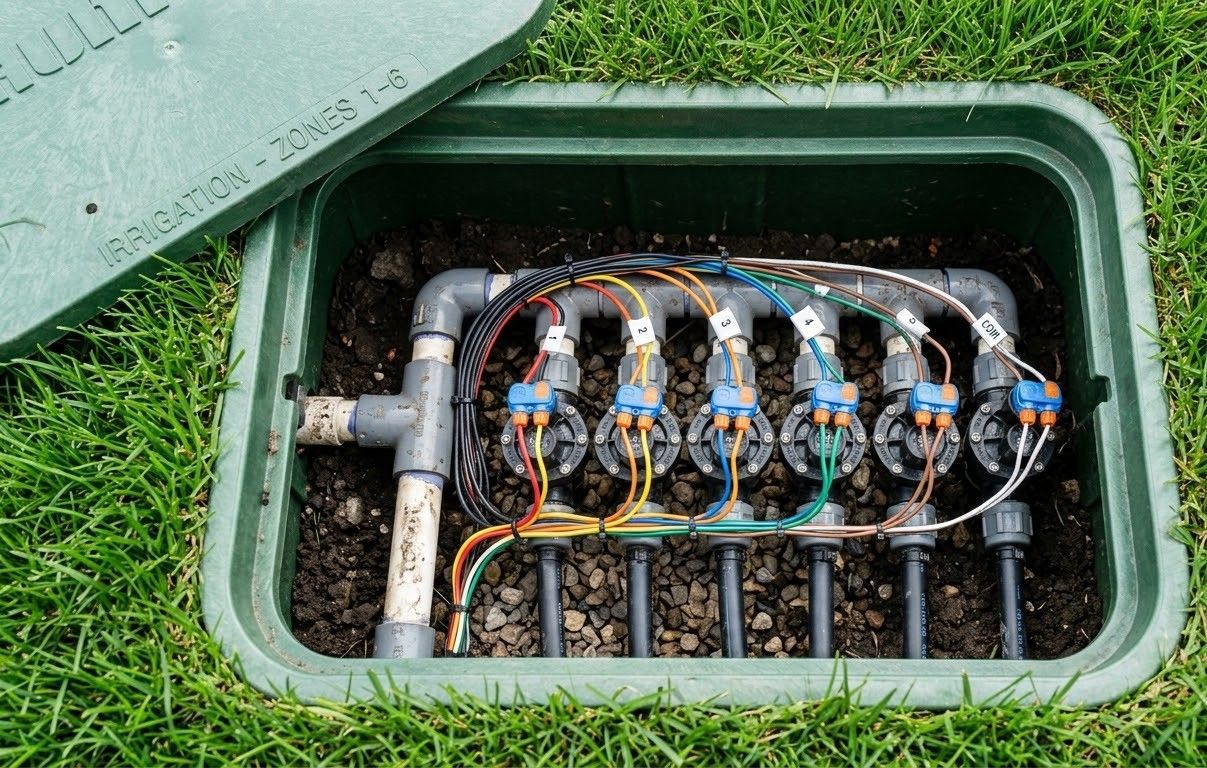
Valve Manifold and Field Wiring
Manifolds are built in accessible boxes with room to service a solenoid without excavating the lawn. Wire runs are sized for distance, color coded and spliced with waterproof connectors so troubleshooting later takes minutes rather than hours.
SMART CONTROL
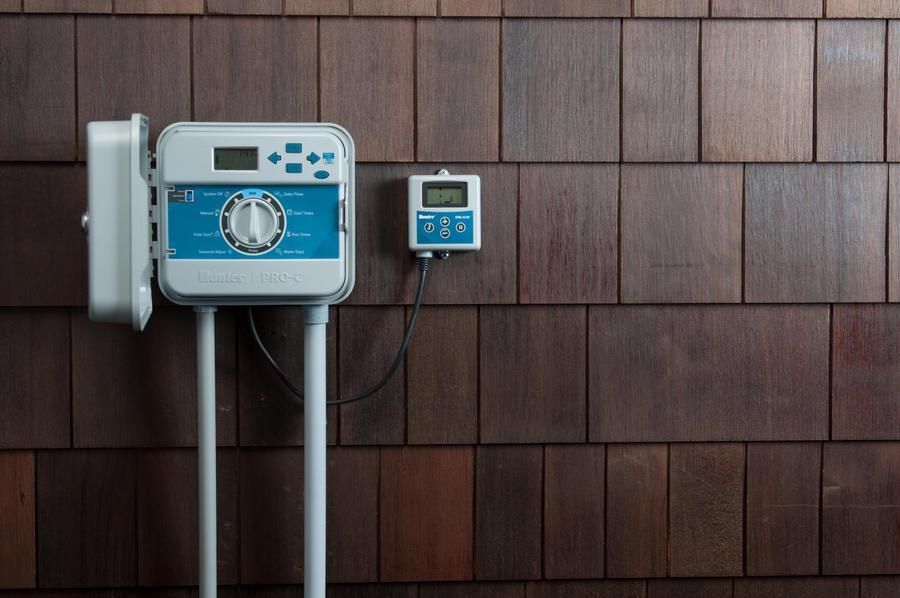
Controller and Rain Sensor Setup
Controllers are mounted, wired and programmed with seasonal schedules for your specific zones. A rain or moisture shut-off device is included on new automatic systems, so cycles skip themselves after a storm without anyone remembering to intervene.
WATER SAFETY
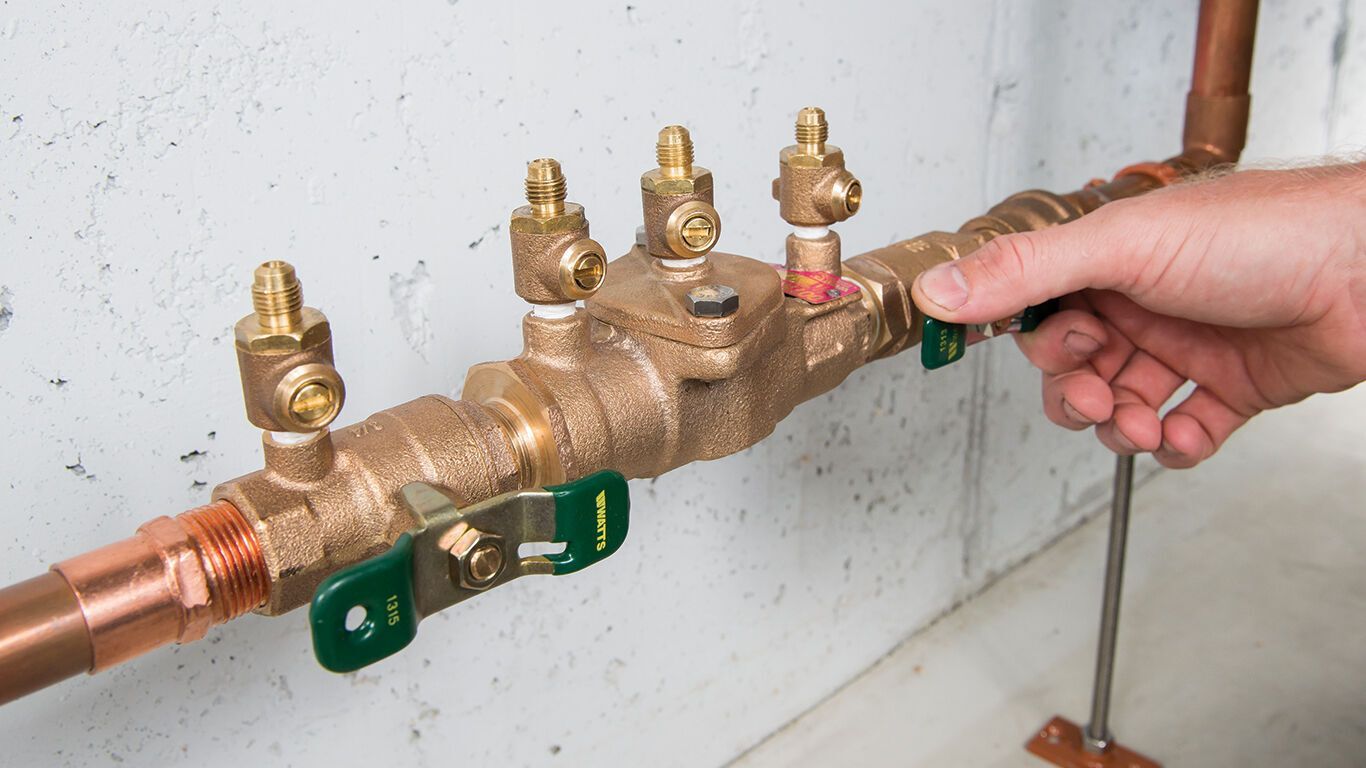
Backflow Prevention and Isolation Valves
An approved backflow assembly protects household drinking water from anything sitting in irrigation lines. We set it with an isolation valve between the meter and the assembly, positioned for freeze protection and straightforward annual testing.
THE WORD ON OUR WORK
WHAT OUR CLIENTS SAY.
The comments we hear most often are about the parts people did not expect: sod laid back so neatly you cannot find the trench, a walk-through where someone actually explains the controller, and a phone call returned the same day. Reviews are posted on our Google profile.
Common Questions
FREQUENTLY ASKED QUESTIONS.
These come up on nearly every estimate we write for a new system. If your question is not here, send the details through our contact page and we will answer it plainly.
How should a sprinkler system be designed for an East Texas property?
Design should account for property size and shape, sun and shade, landscaping, soil, slopes, plant types, and available pressure. Different portions of the same Tyler or Longview property need different amounts of water, so irrigation is divided into zones.
Why do sprinkler heads keep breaking or getting stuck?
Heads are damaged by mowers, vehicles, soil movement, debris, ordinary wear, and incorrect installation height. Heads set too low fill with soil and thatch until they cannot retract, while heads riding too high take direct hits from equipment.
Should every part of my property be watered for the same amount of time?
Usually not. A sunny lawn, a shaded side yard, a flower bed, and a landscaped border all have different requirements. Good design separates areas with different needs onto their own valves so each one receives an amount that suits it.
How many zones will my property need?
Zone count depends on available flow, not yard size. North East Texas Lawn Sprinkler and Drainage measures what your meter delivers across Winnsboro, TX, then divides heads so every valve gets full pressure, a method refined over 45 years.
How long does a sprinkler installation take?
Most residential systems are trenched, piped, wired, and running within one to three working days, depending on square footage, zone count, and how much hand digging the tree roots or existing hardscape on your lot force us into.
Will installing a system tear up my established lawn?
Trenching leaves narrow lines that knit back within a few weeks. Across Winnsboro, TX, North East Texas Lawn Sprinkler and Drainage pulls sod back rather than shredding it, keeps spoil on boards, and tamps every line before leaving.
How close to a driveway or sidewalk can heads be placed?
Heads are kept at least 4 inches off hardscape, and no zone may throw water onto concrete, asphalt, brick or mortared stone. Nozzle arcs are trimmed back at the edges so pavement stays dry and the water reaches turf.
What is head-to-head coverage and why does it matter?
It means each head throws far enough to reach the next one. Sprinkler output drops off sharply toward the outer edge of its arc, so overlapping throws are what produce even color instead of scalloped dry rings between the heads.
HOW WE WORK
FROM FIRST WALK THROUGH TO FIRST RUN, HERE IS HOW.
STEP 01
WALK THE PROPERTY WITH YOU
We start outside, not at a desk. You show us the corners that burn up, the spots that stay wet, where you park trailers, and which beds matter most to you during a dry July.
STEP 02
MEASURE PRESSURE AND FLOW
Static pressure and available flow at the meter set the ceiling for everything else. Those two numbers decide how many heads a zone can carry and which nozzles will actually perform as printed.
STEP 03
DRAW THE ZONES ON PAPER
The plan gets drawn before anything is ordered. Head placement, arcs, pipe sizing, valve locations, and wire routing are all worked out on the drawing, where a change costs nothing but an eraser and a minute.
STEP 04
TRENCH AND SET THE PIPE
Sod is lifted, lines are pulled to proper depth, and mainline, laterals and wire go in together. Everything is pressure checked while the trench is still open, because a joint is far easier to reach now.
STEP 05
SET HEADS AND TUNE THE ARCS
Heads are set flush at finished grade, then every arc and radius is adjusted by hand while the zone runs. Spray gets pulled off pavement, fences and windows before we call a zone finished.
STEP 06
PROGRAM AND HAND OVER
A seasonal schedule goes in, then we walk you through the controller and the shut-off valve, and leave the design plan and completed paperwork in your hands rather than mailing them along a week later.
Get Your Free Estimate
SEND US YOUR YARD, AND WE WILL PRICE THE SYSTEM, FREE.
A lawn that stays green through an East Texas August is the result of decisions made before anyone breaks ground, and those are the decisions we bring to every property we take on in Winnsboro, TX and the surrounding counties. Tell us about your property through our contact page and we will schedule a walk-through, measure what your water supply can support, and put a written number in your hands with no pressure attached.
WHAT YOUR INSTALLATION QUOTE COVERS:
✓ On-site walk-through of the whole property
✓ Measured pressure and flow at the meter
✓ Zone by zone layout drawing
✓ Head, nozzle and controller selection
✓ Backflow and sensor requirements included
✓ A written price with no obligation